
Managing soils for negative feedback to climate change and positive impact on food and nutritional security

This paper by Dr. Rattan Lal detailing the scope of nature-based climate solutions, including but not limited to grasslands and soils. Findings show that “the soil C sink capacity, between 2020 and 2100, with the global adoption of best management practice which creates a positive soil/ecosystem C budget, is estimated at 178 Pg C for soil, 155 Pg C for biomass, and 333 Pg C for the terrestrial biosphere with a total CO2 drawdown potential of 157 ppm.”
Ecosystem Impacts and Productive Capacity of a Multi-Species Pastured Livestock System
This paper conducted a whole-farm life cycle assessment (LCA) of a multi-species pasture rotation (MSPR) farm in the southeastern United States that was originally converted from degraded cropland. Results showed an average of 2.29 Mg C ha−1 yr−1. Incorporation of soil C sequestration into the LCA reduced net GHG emissions by 80%, resulting in a footprint 66% lower than commodity production systems.
It’s Not the Cow, It’s the How
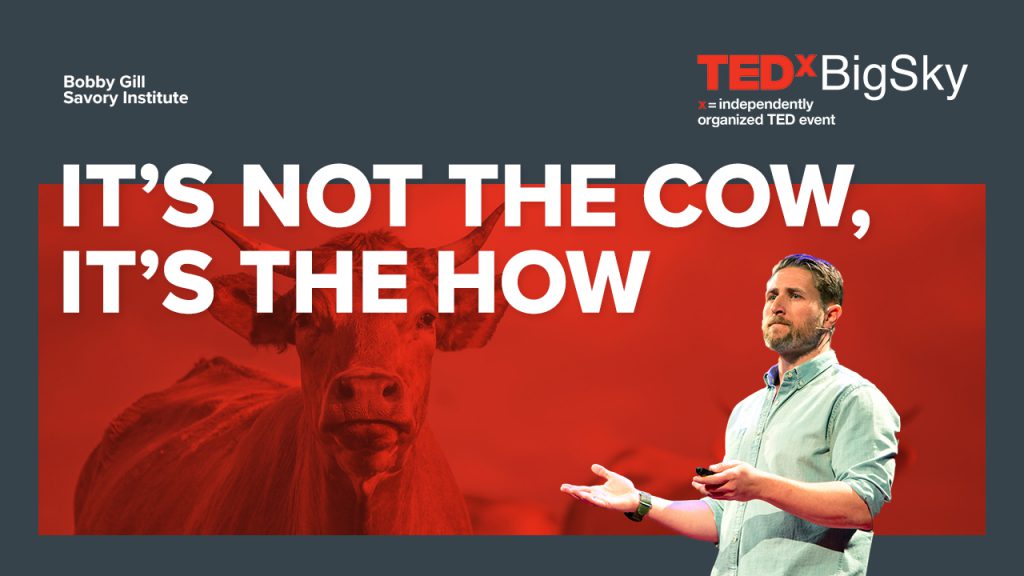
In this thought-provoking talk, Bobby Gill of the Savory Institute discusses the symbiosis between grasslands and grazer, and why everyone — regardless of dietary choice — depends on properly-managed livestock for regenerating these dying landscapes.
A half-century of Holistic Management: what does the evidence reveal?
This comprehensive literature review describes the main tenets of HM and addresses the longstanding and unresolved controversy over its legitimacy. It additionally provides a meta-analysis that not only provides an up-to-date review of the multidisciplinary evidence and ongoing arguments about HM, but also provides a novel explanation for the controversy.
Water in Plain Sight
Animated by stories from around the globe, Water In Plain Sight is an inspiring reminder that fixing the future of our drying planet involves understanding what makes natural systems thrive. In this timely, important book, Judith D. Schwartz presents a refreshing perspective on water that transcends zero-sum thinking. By allying with the water cycle, we can revive lush, productive landscapes, like the river in rural Zimbabwe that now flows miles further than it has in living memory thanks to restorative grazing; the fruit-filled food forest in Tucson, Arizona, grown by harvesting urban wastewater; or the mini-oasis in West Texas nourished by dew.
Kiss the Ground
This “richly visual” look at the impact of an underappreciated but essential resource—the very ground that feeds us—features fascinating and accessible interviews with celebrity chefs, ranchers, farmers, and top scientists. Kiss the Ground teaches you how to become an agent in humanity’s single most important and time-sensitive mission: reverse climate change and effectively save the world—all through the choices you make in how and what to eat. Also a full-length documentary executive produced by Leonardo DiCaprio and narrated by Woody Harrelson.
Review of Evidence on Drylands Pastoral Systems and Climate Change: Implications and Opportunities for Mitigation and Adaptation
This report highlights the importance of drylands, grazing lands and livestock-based livelihoods and illustrates their relationship with climate and with climate mitigation through the adoption of methodologies to restore soil. The editors write “There is a great potential for carbon sequestration in drylands because of their large extent and because substantial historic carbon losses mean that drylands soils are now far from saturation (FAO/LEAD, 2006). Lal (2004) estimates that soil carbon sequestration in the dryland ecosystems could achieve about 1 billion tonnes C per year but reaching this will require a vigorous and coordinated effort at a global scale.” It should be noted that more recent studies suggest that the drawdown potential might be higher.
Global Warming and Pasture-Raised Beef Production in the United States
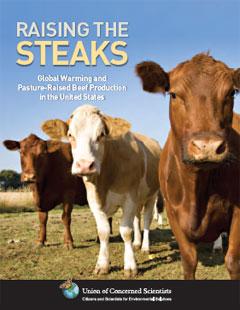
This report evaluates the prospects for changing management practices to reduce the climate impact of the time beef cattle spend on pasture or rangeland. Improved practices are most readily applied to the finishing stage of fully pasture-raised systems—a growing alternative to CAFOs, given research showing that pasture finishing has nutritional and environmental benefits. In the long term, the use of climate-friendly best practices in the United States may lead to substantial cuts in global warming emissions if adopted in countries where beef production accounts for a greater share of those emissions.
Managing the grazing landscape: Insights for agricultural adaptation from a mid-drought photo-elicitation study in the Australian sheep-wheat belt
This paper compares the landscape perceptions of HM graziers with those of more conventional graziers. HM graziers described their use of adaptive farm management techniques to gain outcomes for production and ecosystems alike, demonstrating a system-based understanding of their farms conducive to farming successfully under increased climate variability.
The role of ruminants in reducing agriculture’s carbon footprint in North America

This paper determined that properly-managed grazing, if applied on 25% of our crop and grasslands, would mitigate the entire carbon footprint of North American agriculture. Better management of cropping and grazing practices in North America could draw down and sequester in soil 1.2 gigatons of carbon annually, equivalent to about 10% of the world’s total greenhouse gas emissions.
