
The Soil Story
This short animated film by Kiss the Ground shows how soil can be one of our greatest allies in creating a healthier planet.
Restoring the Climate Through Capture and Storage of Soil Carbon

In this 2015 whitepaper by the Savory Institute, grasslands are discussed as an important carbon sink for addressing the climate crisis.
The Potential of Restorative Grazing to Mitigate Global Warming by Increasing Carbon Capture on Grasslands
This white paper reviews the literature on soil organic carbon losses and potential gains through regenerative management. It finds that most literature is limited to areas considered in “agriculture” and that rangelands may be largely under represented both in terms of of losses and drawdown potential. It argues that with regenerative rangeland practices, such as Holistic Planned Grazing, the total capture of atmospheric carbon may be much higher than previously considered. An upward estimate of 88 to 210 gigatons (billions of tons) of carbon (88-210 GtC) representing a total drawdown of 25 to 60 tons per hectare on 3500 million hectares of grasslands worldwide is postulated as achievable through proper rangeland/grassland management.
The Soil Will Save Us
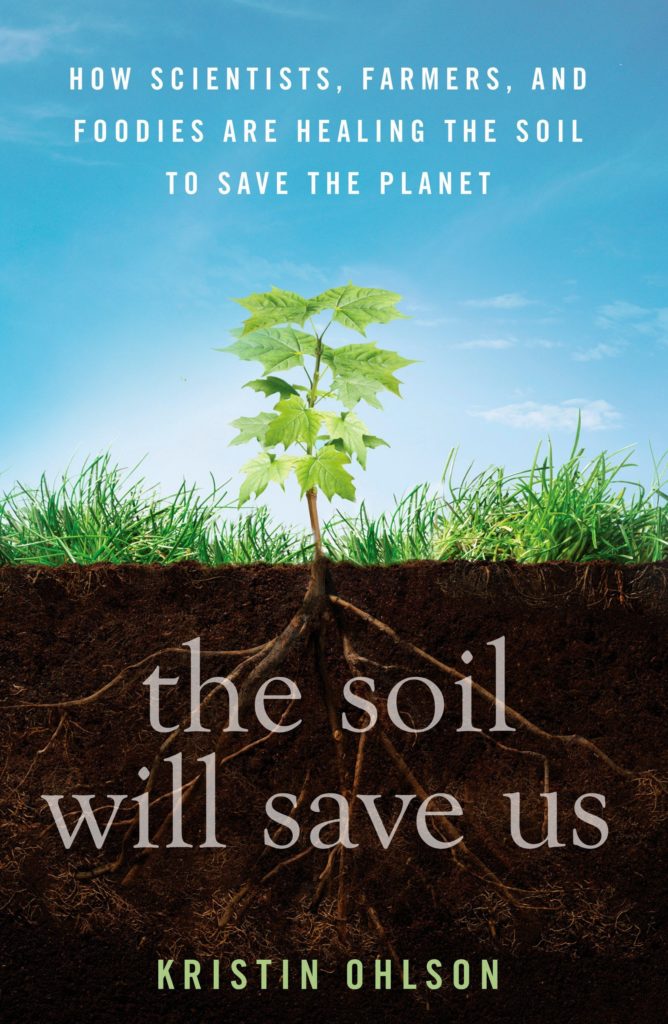
Journalist and bestselling author Kristin Ohlson makes an elegantly argued, passionate case for “our great green hope”—a way in which we can not only heal the land but also turn atmospheric carbon into beneficial soil carbon—and potentially reverse global warming.
The Fight Against Global Warming: A Failure and A Fix
Adam Sacks of Bio4Climate pens a lively and detailed discussion on livestock, climate, and the need to establish healthy soils as a means of managing excess carbon in the atmosphere.
Cows Save the Planet
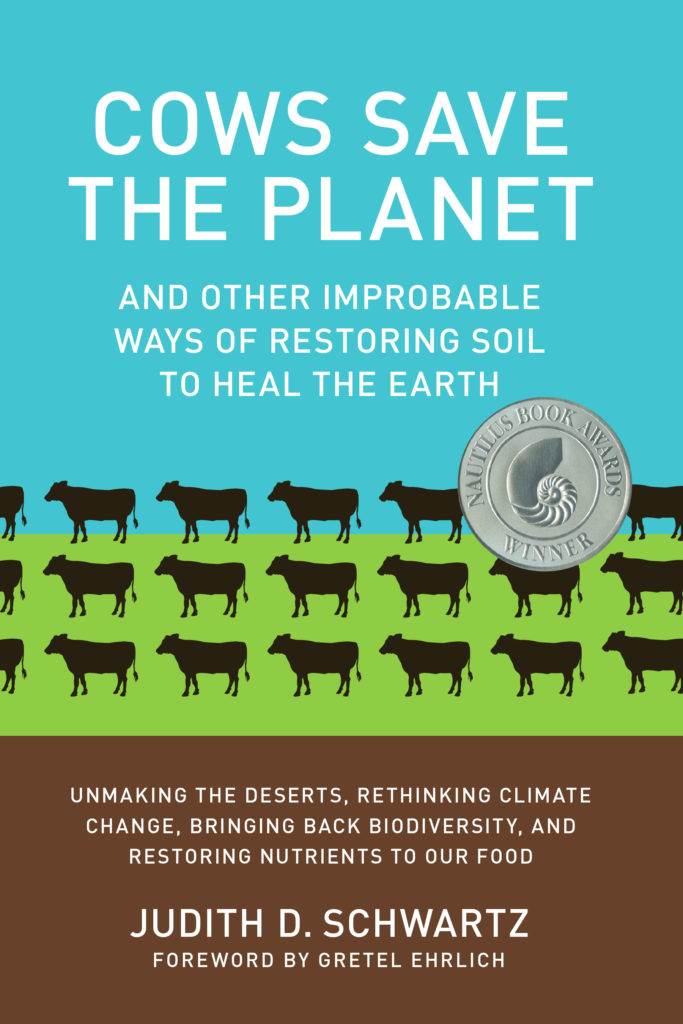
In Cows Save the Planet, journalist Judith D. Schwartz looks at soil as a crucible for our many overlapping environmental, economic, and social crises. Schwartz reveals that for many of these problems – climate change, desertification, biodiversity loss, droughts, floods, wildfires, rural poverty, malnutrition, and obesity – there are positive, alternative scenarios to the degradation and devastation we face.
Allan Savory’s TED Talk: “How to green the world’s deserts and reverse climate change”
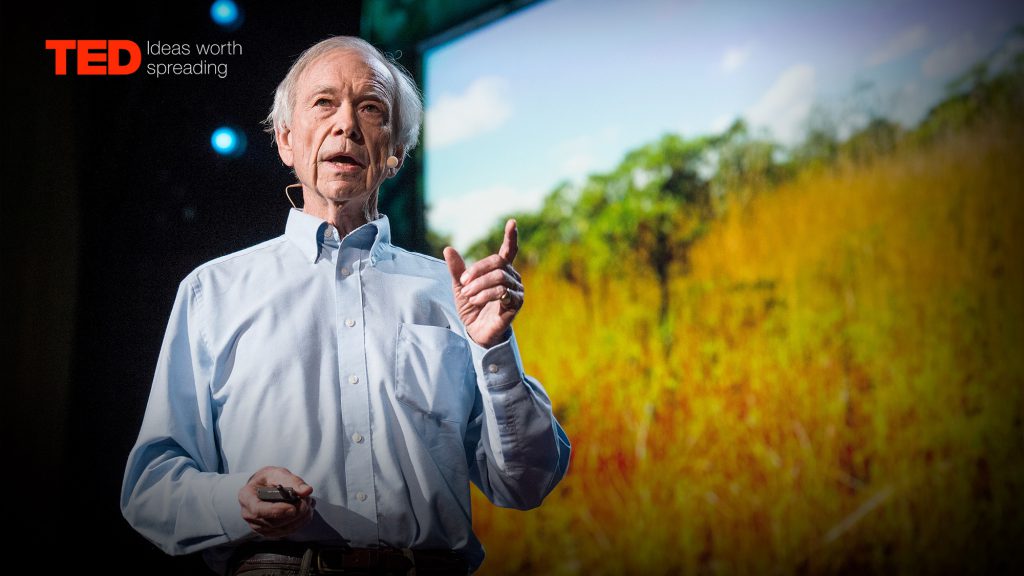
Allan Savory’s famous 2013 TED Talk on the main stage.
Soil Carbon Sequestration in U.S. Rangelands
This Environmental Defense Fund issues paper from 2009 recognized the magnitude of rangelands as a global ecosystem (up to half the land surface area of the planet) and of rangeland soils as a carbon sink suitable to mitigate global warming through proper management actions (“protocols”). It states that on the 761 million acres of rangelands in the United States, 198 million tons of atmospheric carbon dioxide (CO2) – or 3.3% of US fossil fuel emissions – could be sequestered into newly formed soil each year for 30 years. Several actions for soil improvement on rangelands are presented, the number one of which is “Conversion of abandoned and degraded cropland to grassland.” Some other recommended actions include avoiding conversion of rangeland to croplands in the first place, extensive grazing management and adjusting stocking rates.
The Potential of U.S. Grazing Lands to Sequester Carbon and Mitigate the Greenhouse Effect
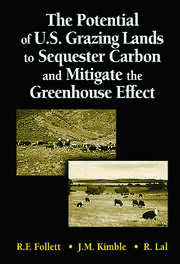
This book describes grazing lands, the areas they occupy, and their important role in sequestering C to help mitigate the greenhouse effect. Table 16.1 shows that rangelands in the US can sequester between 17.5 and 90.5 million metric tons of carbon per year through soil enhancement measures including improved grazing and conversion of crops to pasture.
