
Global Warming and Pasture-Raised Beef Production in the United States
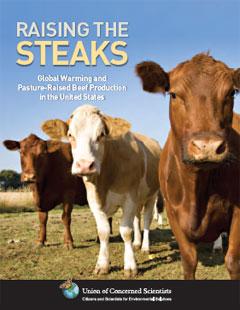
This report evaluates the prospects for changing management practices to reduce the climate impact of the time beef cattle spend on pasture or rangeland. Improved practices are most readily applied to the finishing stage of fully pasture-raised systems—a growing alternative to CAFOs, given research showing that pasture finishing has nutritional and environmental benefits. In the long term, the use of climate-friendly best practices in the United States may lead to substantial cuts in global warming emissions if adopted in countries where beef production accounts for a greater share of those emissions.
GHG Mitigation Potential of Different Grazing Strategies in the United States Southern Great Plains

This paper demonstrates that enteric emissions (methane) from cows are not a climate impediment when the animals are managed in a way that builds soil, thus, capturing carbon. Specifically, using a life cycle assessment that weighs emissions against sequestration, it calculates a net drawdown of approximately 2 tons of carbon per hectare per year (0.8 tons per acre per year) after a conversion from heavy continuous to multi-paddock grazing.
Emerging land use practices rapidly increase soil organic matter

This paper studies three farms converted from cropland to management intensive grazing. “Farms accumulated C at 8.0 Mg ha−1 yr−1, increasing cation exchange and water holding capacity by 95% and 34%, respectively.”
Potential mitigation of midwest grass-finished beef production emissions with soil carbon sequestration in the United States of America
This partial life cycle assessment (LCA) compared two grazing management strategies: 1) a non-irrigated, lightly-stocked, high-density system (MOB) and 2) an irrigated, heavily-stocked, low-density system (IRG). Results indicated that when soil carbon sequestration (SCS) potential was included, each grazing strategy could be an overall sink, with the MOB system found to have greater SCS than the IRG system.
Impacts of soil carbon sequestration on life cycle greenhouse gas emissions in Midwestern USA beef finishing systems
This paper does a greenhouse gas life cycle analysis (LCA) comparison of two grazing finishing systems in the Upper Midwest, USA: feedlot finishing and Holistic Planned Grazing, which the authors refer to as adaptive multipaddock (AMP). It finds that AMP finishing improved soil organic carbon by 3.5 tons per hectare per year. This resulted in a net negative footprint of 6.6 kg of carbon dioxide equivalence per kg of carcass-weight.
Less Stress, More Grass by Managing Holistically

Organic dairy farm, Dharma Lea, experienced economic, social and ecological benefits when making the switch from rotational grazing to Holistic Planned Grazing.
The role of ruminants in reducing agriculture’s carbon footprint in North America
This paper determined that properly-managed grazing, if applied on 25% of our crop and grasslands, would mitigate the entire carbon footprint of North American agriculture. Better management of cropping and grazing practices in North America could draw down and sequester in soil 1.2 gigatons of carbon annually, equivalent to about 10% of the world’s total greenhouse gas emissions.
The Investment Case for Ecological Farming

Defending Beef: The Case for Sustainable Meat Production
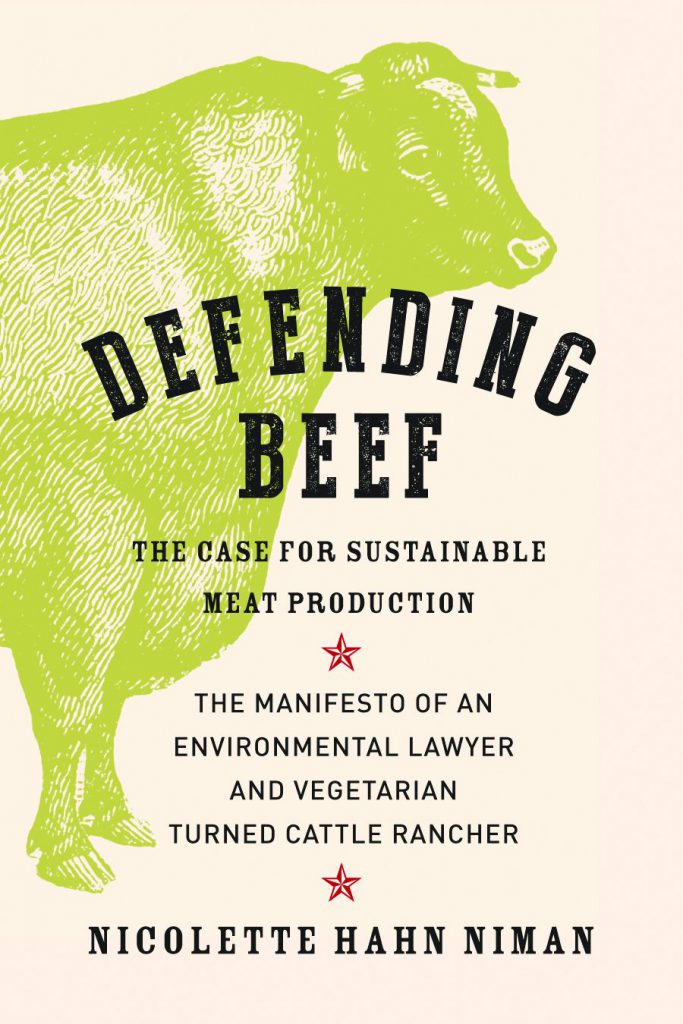
In Defending Beef, longtime vegetarian Nicolette Hahn Niman argues that cattle are not inherently bad for either the Earth or our own nutritional health. In fact, properly managed livestock play an essential role in maintaining grassland ecosystems by functioning as surrogates for herds of wild ruminants that once covered the globe.
The Potential of Restorative Grazing to Mitigate Global Warming by Increasing Carbon Capture on Grasslands
This white paper reviews the literature on soil organic carbon losses and potential gains through regenerative management. It finds that most literature is limited to areas considered in “agriculture” and that rangelands may be largely under represented both in terms of of losses and drawdown potential. It argues that with regenerative rangeland practices, such as Holistic Planned Grazing, the total capture of atmospheric carbon may be much higher than previously considered. An upward estimate of 88 to 210 gigatons (billions of tons) of carbon (88-210 GtC) representing a total drawdown of 25 to 60 tons per hectare on 3500 million hectares of grasslands worldwide is postulated as achievable through proper rangeland/grassland management.
