
Carbon Footprint Evaluation of Regenerative Grazing at White Oak Pastures
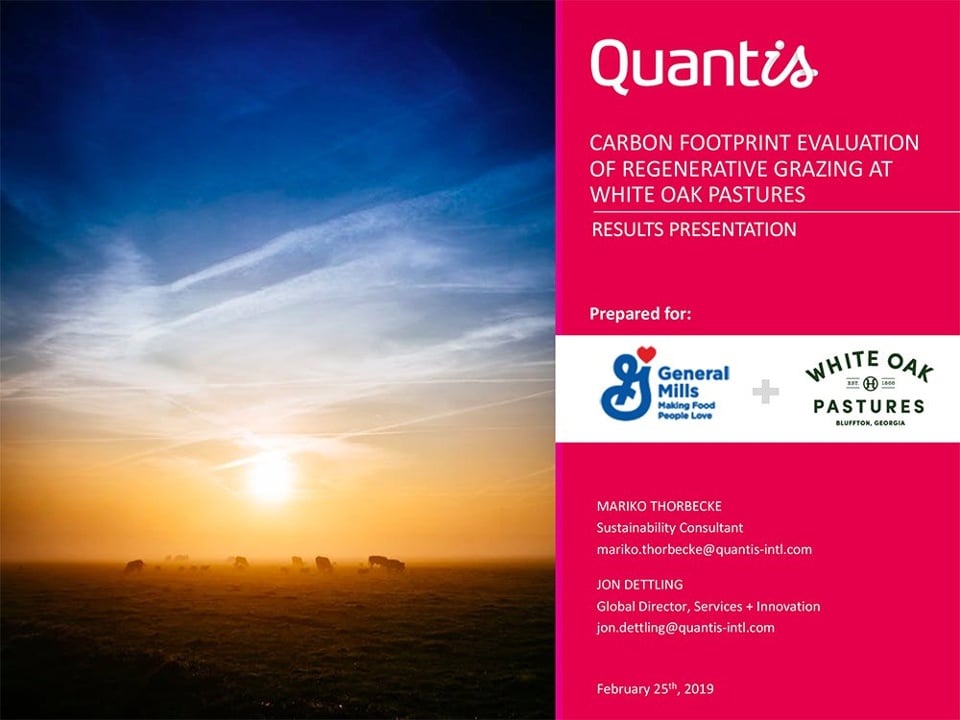
Lifecycle analysis on White Oak Pastures’ beef. Results demonstrated that a pound of protein sequestered 3.5 pounds of CO2, in comparison to conventional beef which emitted 33 pounds of CO2 per pound of protein, or even Impossible Burger or Beyond Meat which emitted 3.5 pounds and 2 pounds of CO2 per pound of protein, respectively.
Regarding Holechek and Briske, and Rebuttals by Teague

This article discusses reports authored by university researchers David Briske and Jerry Holechek that were critical of methods they had attributed to Allan Savory. It is shown that the Briske and Holechek mischaracterized Savory’s work and that, in fact, the types of trials they reviewed are precisely the type that Savory himself discourages.
Critical choices for crop and livestock production systems that enhance productivity and build ecosystem resilience
This report provides an overview of systems of production that reduce negative agricultural impacts on the use of soil, water, and biological resources; many highlighted approaches (e.g. maximizing crop residue, enhancing nutrient and water cycles, etc.) regenerate ecosystem resilience and ecosystem services. Planned grazing strategies recognize that it is not livestock per se but the choice of grazing management system and its suitability for the landscape, that leads to positive or negative effects. Holistic Management (HM), which uses timed controlled grazing to replicate the behaviour and effects of wild herds of ungulates in original ecosystems, particularly in semi-arid areas, is the best known grassland management system that uses livestock as a tool to enhance productivity and ecosystem function. HM has been used effectively on different continents to restore grassland ecosystems in the absence of increased rainfall or irrigation.
Review of Evidence on Drylands Pastoral Systems and Climate Change: Implications and Opportunities for Mitigation and Adaptation
This report highlights the importance of drylands, grazing lands and livestock-based livelihoods and illustrates their relationship with climate and with climate mitigation through the adoption of methodologies to restore soil. The editors write “There is a great potential for carbon sequestration in drylands because of their large extent and because substantial historic carbon losses mean that drylands soils are now far from saturation (FAO/LEAD, 2006). Lal (2004) estimates that soil carbon sequestration in the dryland ecosystems could achieve about 1 billion tonnes C per year but reaching this will require a vigorous and coordinated effort at a global scale.” It should be noted that more recent studies suggest that the drawdown potential might be higher.
Challenges and opportunities for carbon sequestration in grassland systems: a technical report on grassland management and climate mitigation
This 2010 FAO report makes a strong case for grasslands restoration as a climate mitigation strategy and “improved grazing management” as one of the most important practices for enhancing soil carbon stocks.
Global Warming and Pasture-Raised Beef Production in the United States
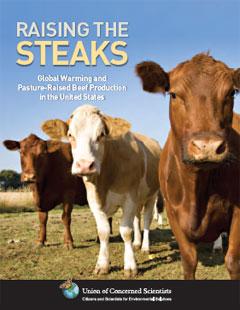
This report evaluates the prospects for changing management practices to reduce the climate impact of the time beef cattle spend on pasture or rangeland. Improved practices are most readily applied to the finishing stage of fully pasture-raised systems—a growing alternative to CAFOs, given research showing that pasture finishing has nutritional and environmental benefits. In the long term, the use of climate-friendly best practices in the United States may lead to substantial cuts in global warming emissions if adopted in countries where beef production accounts for a greater share of those emissions.
