
Amping up soil carbon: soil carbon stocks in California rangelands under adaptive multi-paddock and conventional grazing management

This study measured soil carbon across 64 California ranches and found that AMP-grazed pastures held 13–29% more soil carbon than conventionally grazed ones. The gains extended deep into the soil profile, highlighting AMP grazing’s strong potential for long-term carbon storage and climate impact.
Ruminating on soil carbon: Applying current understanding to inform grazing management
This paper proposes a unified conceptual framework combining plant ecophysiology and soil biogeochemistry to explain how soil organic carbon (SOC) accumulates and is stabilized in grazed systems.
Ganado o Desierto (2023)
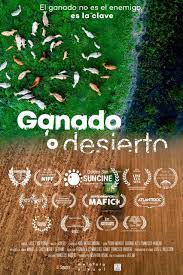
The fight to reverse climate change is putting animals in the crosshairs. The purpose of this documentary is focused on showing the use of livestock for the regeneration of pastures, soils, trees and water. Good livestock management shows itself in a real way as a solution for the restoration of ecosystems and rural economies.
Managing soils for negative feedback to climate change and positive impact on food and nutritional security

This paper by Dr. Rattan Lal detailing the scope of nature-based climate solutions, including but not limited to grasslands and soils. Findings show that “the soil C sink capacity, between 2020 and 2100, with the global adoption of best management practice which creates a positive soil/ecosystem C budget, is estimated at 178 Pg C for soil, 155 Pg C for biomass, and 333 Pg C for the terrestrial biosphere with a total CO2 drawdown potential of 157 ppm.”
Ecosystem Impacts and Productive Capacity of a Multi-Species Pastured Livestock System
This paper conducted a whole-farm life cycle assessment (LCA) of a multi-species pasture rotation (MSPR) farm in the southeastern United States that was originally converted from degraded cropland. Results showed an average of 2.29 Mg C ha−1 yr−1. Incorporation of soil C sequestration into the LCA reduced net GHG emissions by 80%, resulting in a footprint 66% lower than commodity production systems.
Whole-System Approach Managing Grazing to Restore Soil Health and Farm Livelihoods
This paper is a literature review on the ecological impacts of grazing, and finds that where managed properly (employing a “whole-systems approach” and “adaptive, goal-directed grazing methods”) livestock are essential to ecosystem service sustainability and improvement. Soil organic matter increases were sufficient to yield a net sink of 2 tons of carbon per hectare per year.
It’s Not the Cow, It’s the How
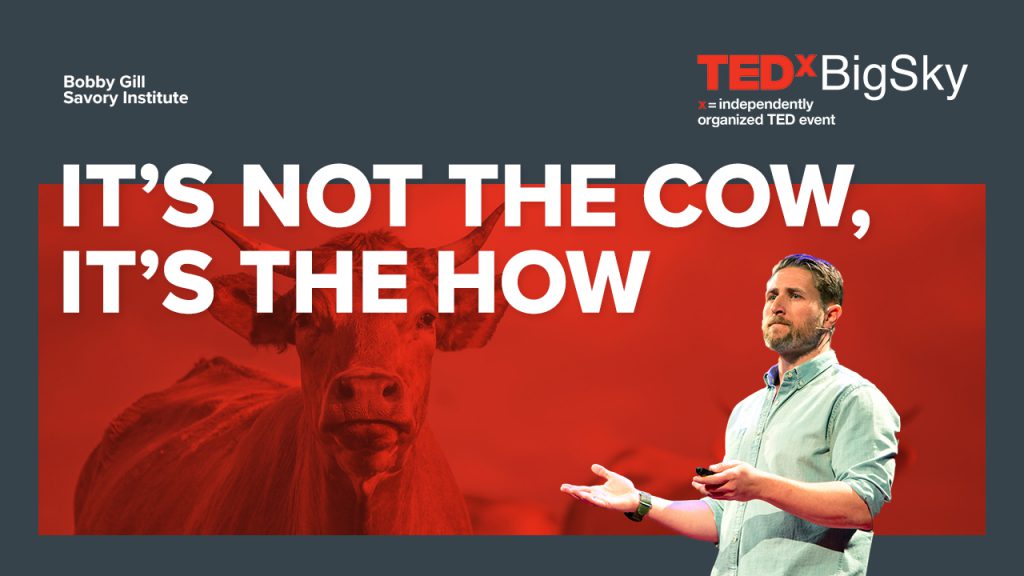
In this thought-provoking talk, Bobby Gill of the Savory Institute discusses the symbiosis between grasslands and grazer, and why everyone — regardless of dietary choice — depends on properly-managed livestock for regenerating these dying landscapes.
Impacts of holistic planned grazing with bison compared to continuous grazing with cattle in South Dakota shortgrass prairie
Paper assesses Holistic Planned Grazing outcomes in shortgrass prairie of the Northern Great Plains of North America. Researchers compared key ecosystem functions on the ranch of long time Holistic Management practitioner Mimi Hillenbrand who grazes bison, with those on neighboring cattle ranches using set stocked light continuous (LCG) and heavy continuous grazing (HCG).
Carbon Footprint Evaluation of Regenerative Grazing at White Oak Pastures
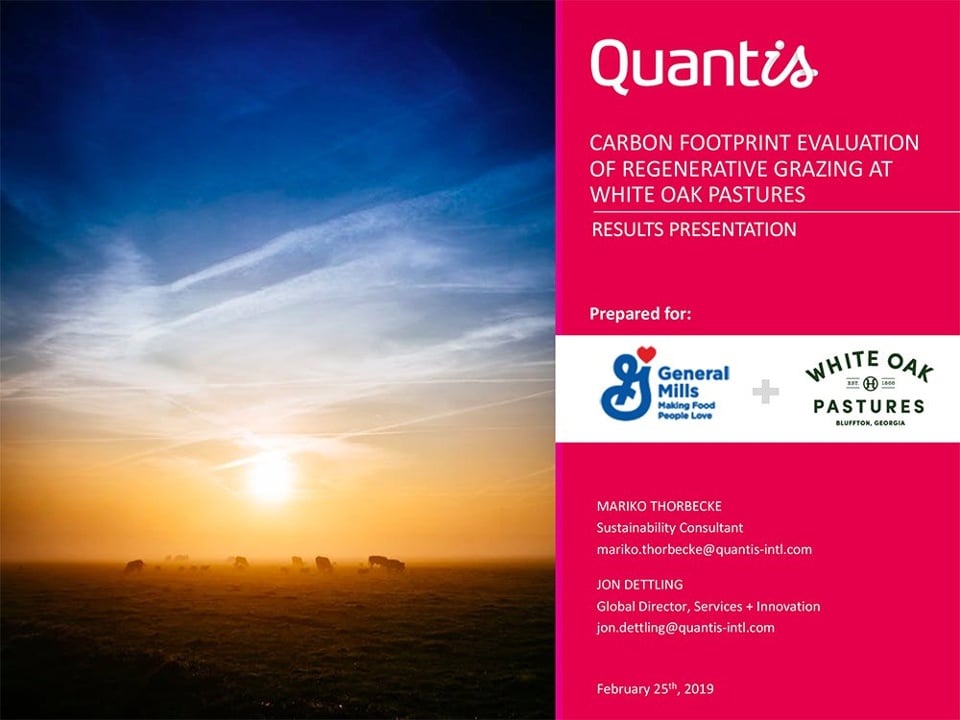
Lifecycle analysis on White Oak Pastures’ beef. Results demonstrated that a pound of protein sequestered 3.5 pounds of CO2, in comparison to conventional beef which emitted 33 pounds of CO2 per pound of protein, or even Impossible Burger or Beyond Meat which emitted 3.5 pounds and 2 pounds of CO2 per pound of protein, respectively.
Kiss the Ground
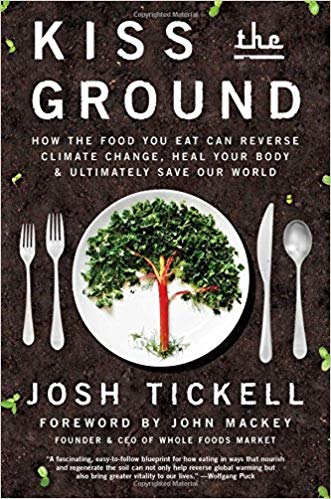
This “richly visual” look at the impact of an underappreciated but essential resource—the very ground that feeds us—features fascinating and accessible interviews with celebrity chefs, ranchers, farmers, and top scientists. Kiss the Ground teaches you how to become an agent in humanity’s single most important and time-sensitive mission: reverse climate change and effectively save the world—all through the choices you make in how and what to eat. Also a full-length documentary executive produced by Leonardo DiCaprio and narrated by Woody Harrelson.
