
One Hundred Thousand Beating Hearts
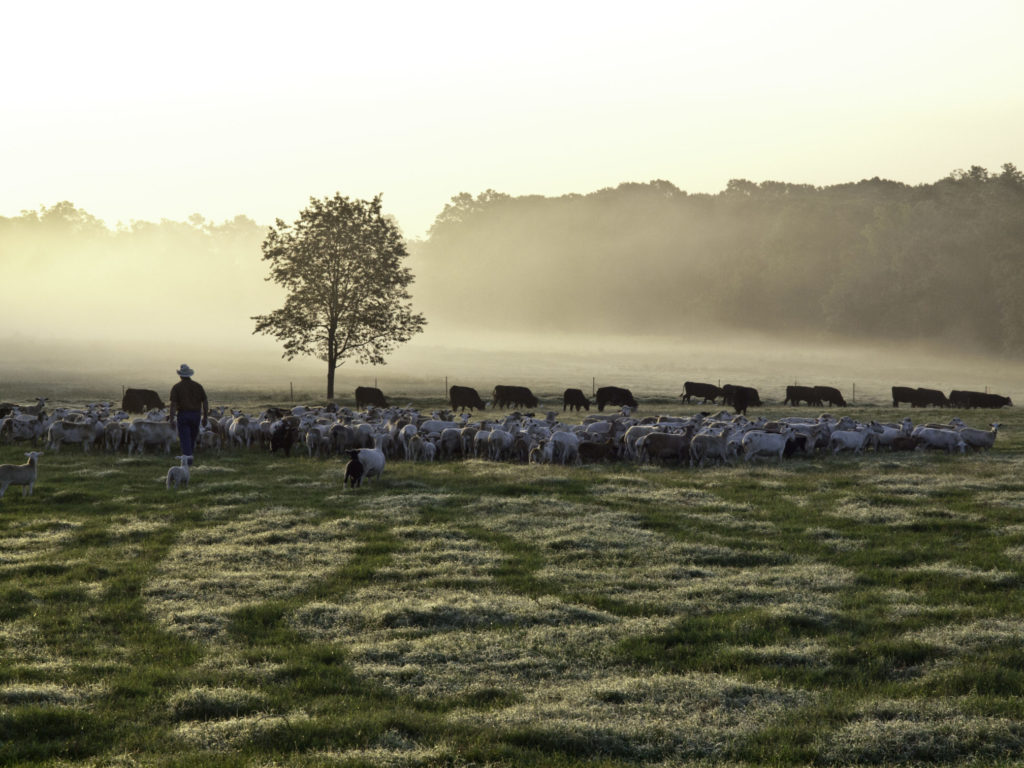
A pioneering farmer in rural Georgia shares his journey from industrialized beef production to sustainable, humane agricultural and environmental stewardship.
Holistic vs. Conventionally Managed Land
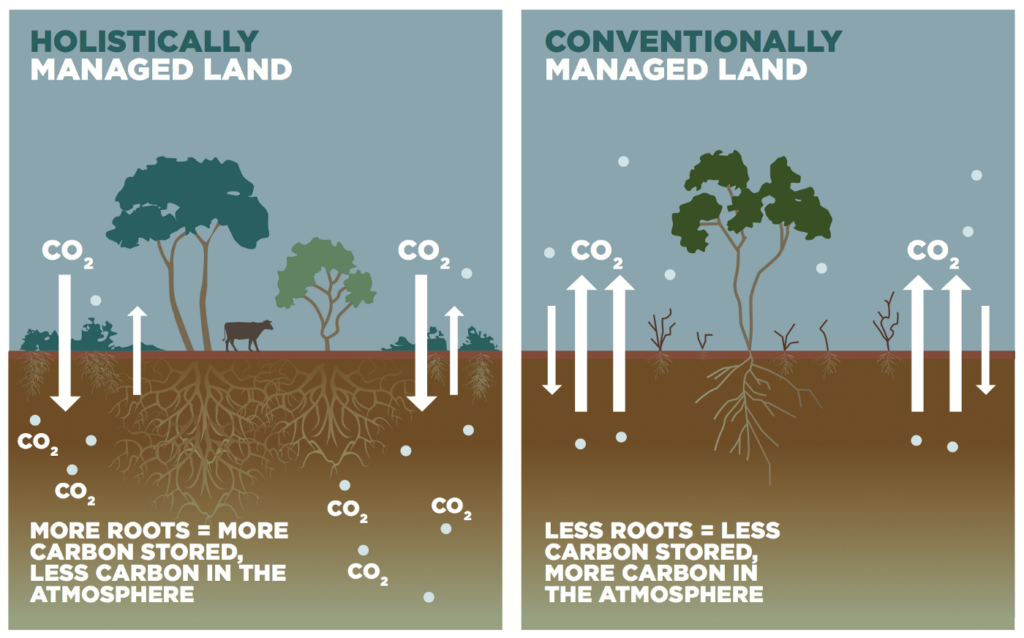
Restoring the Climate Through Capture and Storage of Soil Carbon

In this 2015 whitepaper by the Savory Institute, grasslands are discussed as an important carbon sink for addressing the climate crisis.
About Holistic Planned Grazing
In this 2015 whitepaper, the Savory Institute details the various components of Holistic Planned Grazing (HPG), as well as the differences between HPG and other rotational grazing systems.
Climate Change, Healthy Soils and Holistic Planned Grazing: A Restoration Story
This whitepaper, authored by the Savory Institute in 2015, discusses how Holistic Planned Grazing, if applied across global grasslands, can contribute towards bringing atmospheric CO2 to pre-industrial levels.
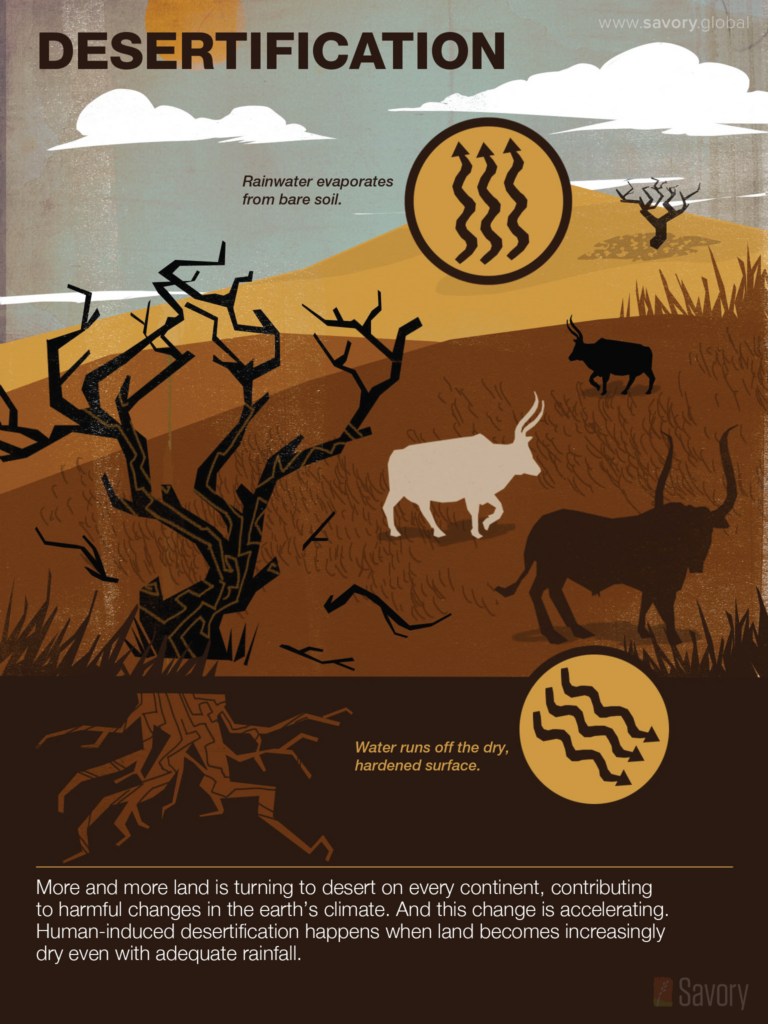
Reversing Desertification Infographics
The Potential of Restorative Grazing to Mitigate Global Warming by Increasing Carbon Capture on Grasslands
This white paper reviews the literature on soil organic carbon losses and potential gains through regenerative management. It finds that most literature is limited to areas considered in “agriculture” and that rangelands may be largely under represented both in terms of of losses and drawdown potential. It argues that with regenerative rangeland practices, such as Holistic Planned Grazing, the total capture of atmospheric carbon may be much higher than previously considered. An upward estimate of 88 to 210 gigatons (billions of tons) of carbon (88-210 GtC) representing a total drawdown of 25 to 60 tons per hectare on 3500 million hectares of grasslands worldwide is postulated as achievable through proper rangeland/grassland management.
Talking Points Regarding Savory
This whitepaper by Seth Itzkan (2013) addresses some of the common misconceptions about Savory’s work.
777 Buffalo Ranch – South Dakota (2014)

This 2013 case study follows Mimi Hillenbrand of the 28,000-acre 777 Bison Ranch in South Dakota, USA. Among other impressive results, over 20 years bare ground has decreased significantly from 34% to under 10%, there are virtually no signs of erosion, and low production grasses are being replaced by deep-rooted native species like Green Needlegrass and native herbs such as Echinacea.
Africa Centre for Holistic Management Zimbabwean Savanna Case Study
This 2012 case study follows the Africa Centre for Holistic Management in Victoria Falls, Zimbabwe. Between 2001 and 2009, ecologoical monitoring demonstrated a 31% decrease in bare ground, 56% increase in litter cover, 12% increase in perennial grass plants, 21% decrease in less desirable annual grasses, and 17% decrease in soil movement.
