
Effect of grazing on soil-water content in semiarid rangelands of southeast Idaho

This papers shows that soils under a grazing method called “simulated holistic planned grazing” have the highest percent volumetric-water content of soils tested under three different grazing methodologies that also included “rest-rotation”, and “total rest”. Although this study was a simulation, it demonstrates the potential for soils managed with Holistic Planned Grazing to increase their water-holding capacity.
Sustainability of holistic and conventional cattle ranching in the seasonally dry tropics of Chiapas, Mexico, Decision Making
Eighteen (18) conventional and seven (7) holistic, dual-purpose ranches were studied using three sets of sustainability metrics combining economic, social, technological, and environmental indicators. Holistic ranchers have more pasture divisions, higher grazing pressure, greater lengths of time between pasture burns, greater milk productivity, larger forest reserves, lower cow and calf mortality, purchase less hay and feed, and use less herbicides and pesticides than their conventional neighbors, with holistic ranches demonstrating superiority for nine of ten indicators. Higher soil respiration, deeper topsoil, increased earthworm presence, more tightly closed herbaceous canopies, and marginally greater forage availability were found in holistic ranches, suggesting that holistic management strategies are leading to greater ecological and economic sustainability.
Impacts of soil carbon sequestration on life cycle greenhouse gas emissions in Midwestern USA beef finishing systems
This paper does a greenhouse gas life cycle analysis (LCA) comparison of two grazing finishing systems in the Upper Midwest, USA: feedlot finishing and Holistic Planned Grazing, which the authors refer to as adaptive multipaddock (AMP). It finds that AMP finishing improved soil organic carbon by 3.5 tons per hectare per year. This resulted in a net negative footprint of 6.6 kg of carbon dioxide equivalence per kg of carcass-weight.
Herd Impact
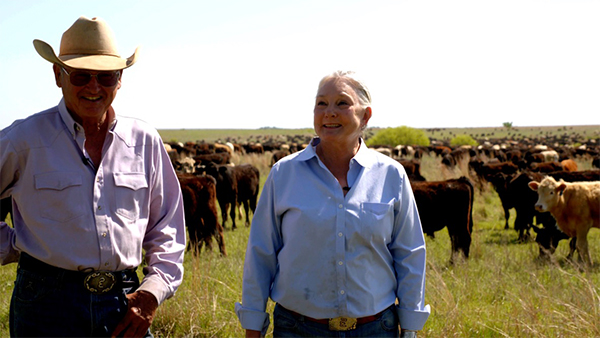
Husband and wife ranchers Emry Birdwell and Deborah Clark have been going against the grain of North Texas ranching for decades – hiding their ability to raise many, many more cattle per acre than any of their neighbors.
Soil Carbon Cowboys

This short film by Peter Byck follows producers who have taken the leap from conventional to regenerative agriculture.
Running Out of Time
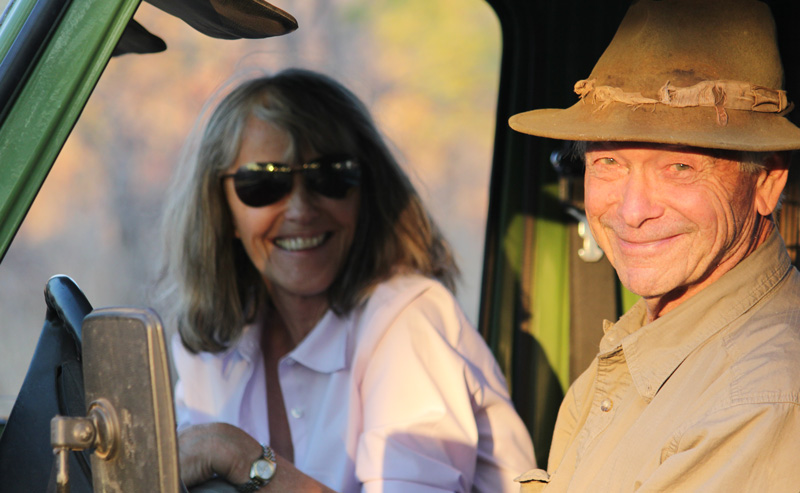
This in-depth documentary explores Allan Savory’s life and how he has used Holistic Management to completely transform the land at Dimbangombe in Victoria Falls, Zimbabwe.
Adaptive multi-paddock grazing enhances soil carbon and nitrogen stocks and stabilization through mineral association in southeastern U.S. grazing lands
This paper conducted a large-scale on-farm study on five “across the fence” pairs of Holistic Planned Grazing, referred to by the authors as adaptive multi-paddock (AMP) grazing, and conventional grazing (CG) grasslands covering a spectrum of southeast United States grazing lands. Findings showed that the AMP grazing sites had on average 13% (i.e., 9 Mg C ha−1) more soil C and 9% (i.e., 1 Mg N ha−1) more soil N compared to the CG sites over a 1 m depth. Additionally, the stocks’ difference was mostly in the mineral-associated organic matter fraction in the A-horizon, suggesting long-term persistence of soil C in AMP grazing farms.
Less Stress, More Grass by Managing Holistically

Organic dairy farm, Dharma Lea, experienced economic, social and ecological benefits when making the switch from rotational grazing to Holistic Planned Grazing.
The Effect of Grazing Regime on Grassland Bird Abundance in New York State
This paper quantified and compared bird abundances on pastures that were subject to continuous grazing, minimal rotation, or Holistic Management. Holistic resource managed pastures had 1.5 and 4.5 times higher average abundances of obligate grassland birds than minimally rotated or continuously grazed pastures, respectively.
The Story of Leather

This docuseries explores a new movement in agriculture championed by forward-thinking producers regenerating land with Holistic Management. In this episode, we meet leaders in the leather industry.
