
Holistic Management Shifts Ranchers’ Mental Models for Successful Adaptive Grazing

This study explores how Holistic Management transforms the way ranchers think and make decisions—shifting them from control-based approaches to regenerative mindsets grounded in values, systems thinking, and ecological feedback.
Ganado o Desierto (2023)
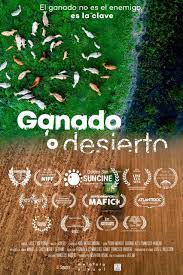
The fight to reverse climate change is putting animals in the crosshairs. The purpose of this documentary is focused on showing the use of livestock for the regeneration of pastures, soils, trees and water. Good livestock management shows itself in a real way as a solution for the restoration of ecosystems and rural economies.
To Which We Belong (2021)
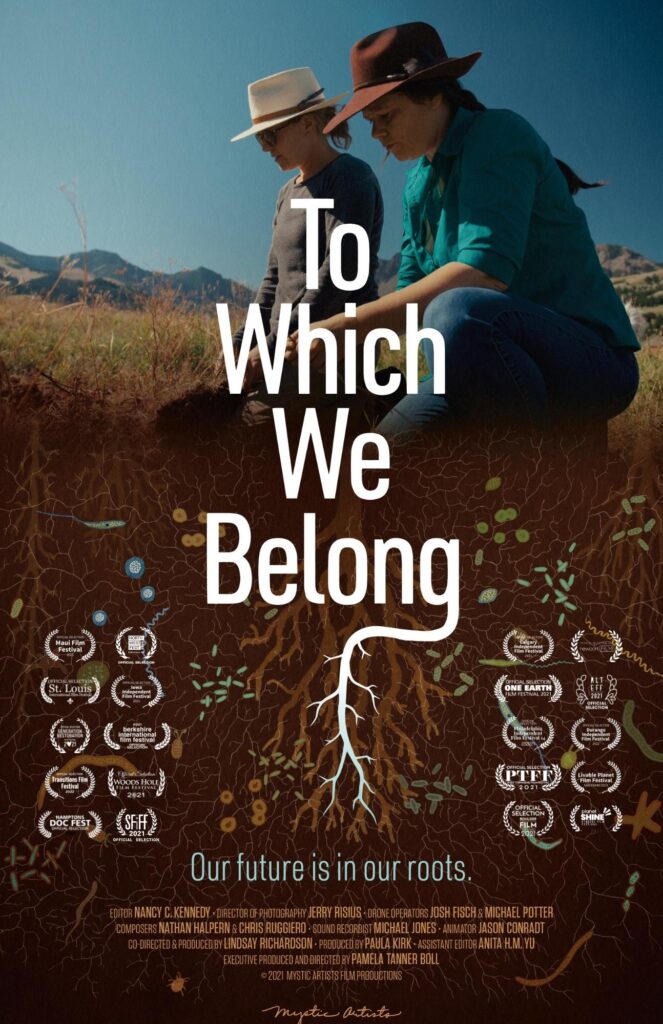
To Which We Belong’ is a documentary that highlights farmers and ranchers leaving behind conventional practices that are no longer profitable or sustainable. These unsung heroes are improving the health of our soil and sea to save their livelihoods — and our planet.
Creating a Sustainable Civilization
‘Creating a Sustainable Civilization: An Introduction to the Holistic Management Decision-Making Process’ is based on a lecture given by Allan Savory at the University of New Mexico, Albuquerque in August 1995.
Holistic Management and Adaptive Grazing: A Trainers’ View

The authors avoid the usual debates on whether or not Holistic Management, Holistic Planned Grazing, or any its many derivatives deliver outcomes as claimed by practitioners, and instead focuses on their contribution to managing complexity. Holistic Management’s biggest acknowledged contribution to the grazing world is (arguably) its emphasis on adaptivity, strategic decision-making, goal-setting, and ability to manage complexity. Based on data gathered from educators in American and Canada who have trained many farmers and ranchers, the authors conclude that Holistic Management represents systems thinking in practice.
Climate change mitigation as a co-benefit of regenerative ranching: Insights from Australia and the United States
This paper argues that the infusion of holistic decision making into the practice of planned grazing, or “regenerative ranching,” results in a suite of ecological, economic and social benefits that are the main factors keeping adherents on the regenerative path. Climate change mitigation is only a ‘co-benefit’ or after-thought. The use of holistic decision-making in the implementation of managed grazing amplifies its effects and increases regenerative potential, and, by extension, climate change mitigation potential.
Livestock Impacts for Management of Reclaimed Land at Navajo Mine: The Decision-Making Process
The Navajo Mine Grazing Management Program (GMP), begun in 1991 to establish that livestock grazing on reclaimed land is sustainable, uses holistic management on approximately 2,083 ha of a former surface coal mine to plan for final liability release and return of the land to the Navajo Nation, and to minimize the potential for post-release liability. A Management Team comprised of local, Navajo Nation, and Federal government officials, company staff, technical advisors, and community members contributed to the formation of a holistic goal articulating shared values and a desire for sustainable grazing, with major decisions tested against the goal.
Less Stress, More Grass by Managing Holistically
Organic dairy farm, Dharma Lea, experienced economic, social and ecological benefits when making the switch from rotational grazing to Holistic Planned Grazing.
Prosperity through Simplicity – The Coughlans of Tarabah
Michael and Anna Coughlin, who manage the 18,000-hectare Tarabah on the plains of southwestern New South Wales, are “among the world’s greatest harvesters of sunlight” according to Howell. The Coughlins also manage the 2,400-hectare Moonbrill property a few hours to the east in a more productive environment… all with just 2.5 full-time employees and close to 6,000 cattle. Despite large tracts of Australia’s perennials reverting to cool season annuals, the Coughlins have created the conditions for pernnials to re-establish, and in doing so the wildlife (including duck-billed platypus and echidnas) has become more abundant.
Resiliency Down Under Drought-Proofing in New South Wales
In 2006-2007, southern Australia faced historic drought conditions, with the Coughlin family’s Tarabeh property receiving 8 of the 17-inch average, and Moombril receiving 10.5 of the normal 30. They survived the drought with more cattle than they started and without buying a pound of hay. This case study details the conditions they faced and the tough decisions that were made to make it through.
