
To Which We Belong (2021)
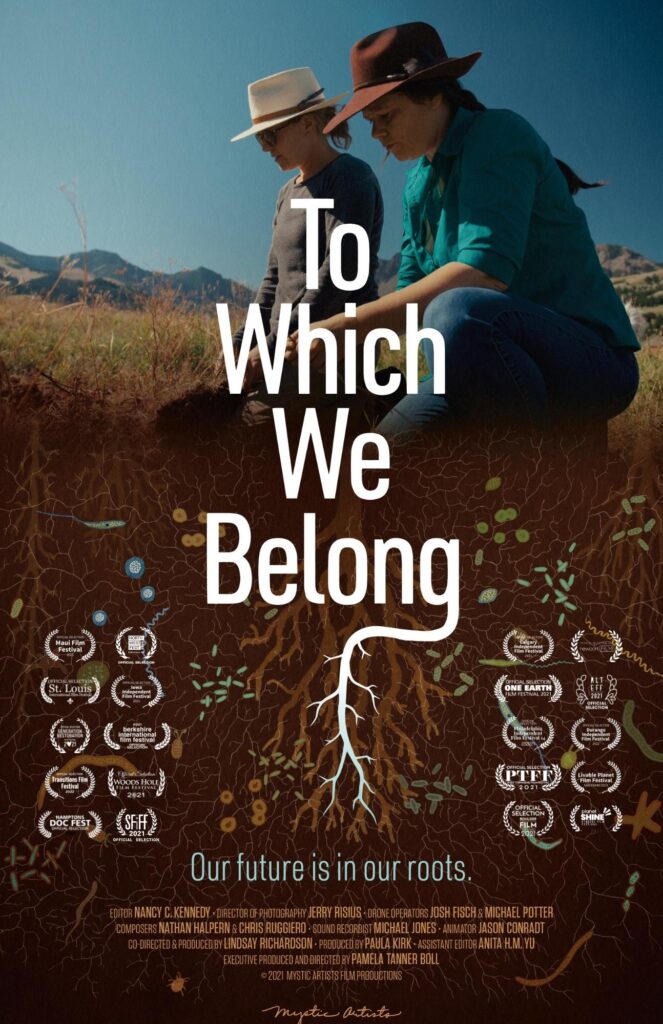
To Which We Belong’ is a documentary that highlights farmers and ranchers leaving behind conventional practices that are no longer profitable or sustainable. These unsung heroes are improving the health of our soil and sea to save their livelihoods — and our planet.
The Effect of Holistic Planned Grazing on African Rangelands: A Case Study from Zimbabwe

South Africa’s Agricultural Research Council completed this study over a 6-year period comparing the Africa Centre for Holistic Management’s land at Dimbangombe under Holistic Planned Grazing (HGP), to nearby communal areas where HPG was not practiced. The researchers concluded that HPG yields positive long-term effects on ecosystem services (soils and vegetation) and points to the HPG approach enhancing the sustainability of livestock and wildlife in this environment.
Managing Grass, Small Grains, and Cattle (1992)

The Goven Ranch is an 1800 acre cattle and small grain operation located in McLean county, North Dakota. From 1967 to 1986, Gene Goven practiced different grazing management systems. In 1986, he made the shift to Holistic Management and Holistic Planned Grazing (referred in the article as Holistic Management’s former name, Holistic Resource Management or HRM). One of the first observed changes in land health occurred in cool season plants; the use of grazing planning allowed the grazing of cool season plants early in the season and extended recovery periods, which improved the
vigor and growth of these plants. Additionally, a “leap frog” approach to paddock movements eliminated the need for fly control, as the distance between “cow pies” self-limited fly populations.
