
Transformational adaptation on the farm: Processes of change and persistence in transitions to ‘climate-smart’ regenerative agriculture

This paper analyzes the experiences of farmers in Australia who have undertaken and sustained transitions from conventional to regenerative agriculture, the majority of whom are Holistic Management practitioners. The authors conclude that transitioning to regenerative agriculture involves more than a suite of ‘climate-smart’ mitigation and adaptation practices. Rather, it involves subjective, nonmaterial factors associated with culture, values, ethics, identity, and emotion that operate at individual, household, and community scales and interact with regional, national and global processes.
Call of the Reed Warbler
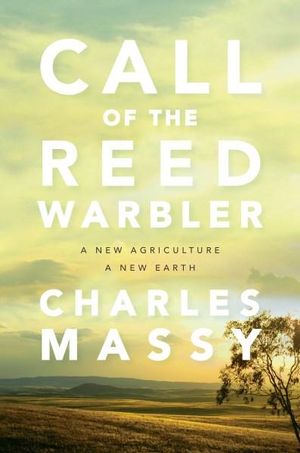
Charles Massy’s Call of the Reed Warbler beautifully captures his personal journey from conventional to regenerative farmer, with detours to learn about many of the great regenerative minds who have helped him along the way.
Cell Grazing – The First 10 Years in Australia
This paper tracks the progress of Cell Grazing in Australia from 1990 when it was first taught, to 1999, from 2 perspectives. Cell Grazing was found to boost business profitability and improve soil as well as to increase rainfall use efficiency and, usually, biodiversity. Described as a high-level, time-control grazing method, Cell Grazing differs from a variety of rotational grazing systems.
Adaptation and change in Queensland’s rangelands: Cell grazing as an emerging ideology of pastoral-ecology
This paper discusses the adaption of “cell grazing” in Australia, which it describes as an “ecologically integrated paradigm.” From the Abstract: “It is argued that cell grazing is, at present, a marginal activity that requires an ideological and cultural shift, as well as an investment in new infrastructure; however, current cell grazing activities may also demonstrate that beef grazing has the potential to be both economically and environmentally sustainable.”
Prosperity through Simplicity – The Coughlans of Tarabah
Michael and Anna Coughlin, who manage the 18,000-hectare Tarabah on the plains of southwestern New South Wales, are “among the world’s greatest harvesters of sunlight” according to Howell. The Coughlins also manage the 2,400-hectare Moonbrill property a few hours to the east in a more productive environment… all with just 2.5 full-time employees and close to 6,000 cattle. Despite large tracts of Australia’s perennials reverting to cool season annuals, the Coughlins have created the conditions for pernnials to re-establish, and in doing so the wildlife (including duck-billed platypus and echidnas) has become more abundant.
Resiliency Down Under Drought-Proofing in New South Wales
In 2006-2007, southern Australia faced historic drought conditions, with the Coughlin family’s Tarabeh property receiving 8 of the 17-inch average, and Moombril receiving 10.5 of the normal 30. They survived the drought with more cattle than they started and without buying a pound of hay. This case study details the conditions they faced and the tough decisions that were made to make it through.
Wool Production and Biodiversity Working Together for Tim and Karen Wright: A Case Study
Lana is a 4,000-hectare sheep property in New England Tablelands region of New South Wales, Australia. Owners introduced a Holistic Management approach in mid-1990s because of degradation of pastures and poor profitability. Results achieved include: Changed from high inputs (fertilizers, sown pastures) to low input system, which reduced fertilizer use by 70%. 100% return on investment in extra fencing within 2 years. Wool yield increased from 73-74% to 78-80%. Labor costs cut in half. Maintained healthy gross margins of $200 per ha. during 2002 drought, when area had lowest rainfall on record and neighboring farmers suffered financial stress.
The Central Australian Grazing Strategies Project Working Paper Series
Etiwanda Station is a 28,000-hectare property in NSW, Australia used to produce sheep, cattle and goats. The owners adopted the Holistic Management approximately 10 years ago. Results include easier animal handling because only 2 mobs (instead of 10 previously) and movement being planned to ensure animals are close to handling facilities at right time; now in top 10% of producers in terms of profitability, compared to average or below average before changing management; improvement in quality and quantity of pastures with an increase in palatable perennial grasses; and set aside of paddocks gives 3-month buffer of feed during periods of drought.
Working in tandem with natural variability: New paradigms for livestock grazing in Australia

This submission to the Australian House of Representatives summarizes how grazing with Holistic Management (HM), a proactive, low-tech solution, (1) provides flexible management options in the face of climatic uncertainty, and (2) enhances the resilience of the natural environment, thus leaving it better prepared for climatic variability.
