
Network Leadership and Practice
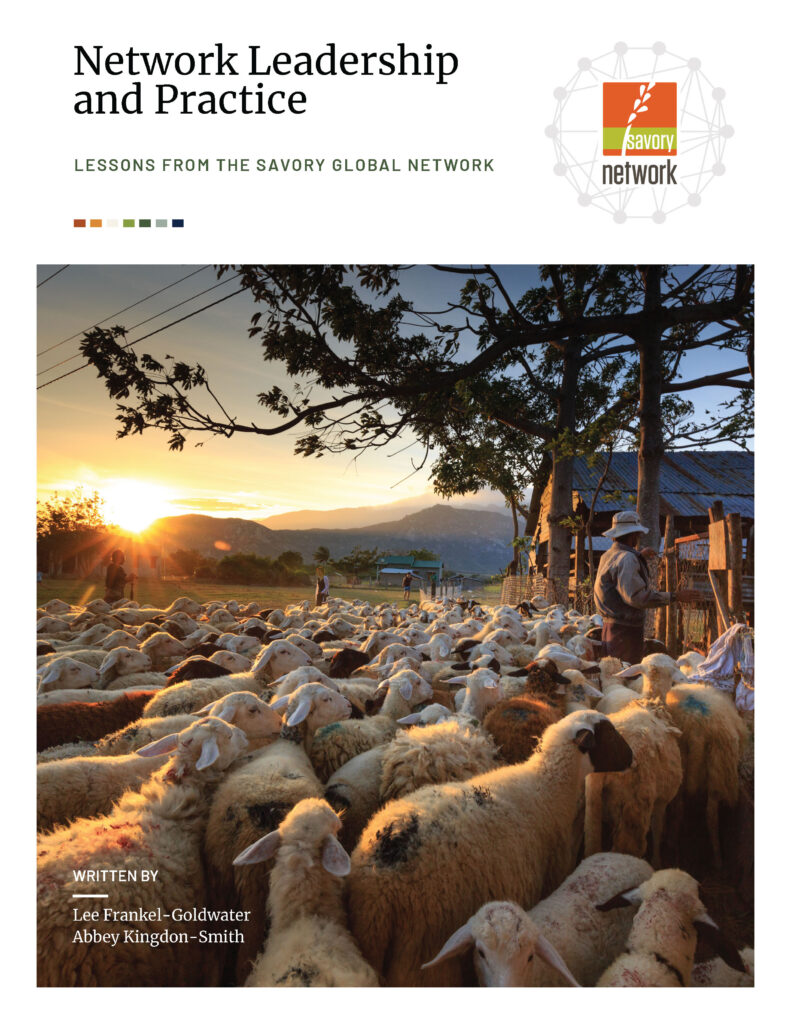
This report summarizes findings from a five-year partnership between University of Colorado Boulder researchers and the Savory Global Network team. The aim of this report is to highlight five key themes around network leadership and practice identified over the course of studying Savory Global Network activities.
Regenerative Grazing for Climate, Ecosystem, and Human Health

Leading up to COP27 in Egypt, and as members of the Global Evergreening Alliance, the Savory Institute contributed towards the development of a document aimed at educating and encouraging world leaders to support regenerative grazing and silvopastoral systems as part of their conference initiatives.
The Investment Case for Ecological Farming
Restoring the Climate Through Capture and Storage of Soil Carbon
In this 2015 whitepaper by the Savory Institute, grasslands are discussed as an important carbon sink for addressing the climate crisis.
About Holistic Planned Grazing
In this 2015 whitepaper, the Savory Institute details the various components of Holistic Planned Grazing (HPG), as well as the differences between HPG and other rotational grazing systems.
Climate Change, Healthy Soils and Holistic Planned Grazing: A Restoration Story
This whitepaper, authored by the Savory Institute in 2015, discusses how Holistic Planned Grazing, if applied across global grasslands, can contribute towards bringing atmospheric CO2 to pre-industrial levels.
Regenerative Capitalism
The Potential of Restorative Grazing to Mitigate Global Warming by Increasing Carbon Capture on Grasslands
This white paper reviews the literature on soil organic carbon losses and potential gains through regenerative management. It finds that most literature is limited to areas considered in “agriculture” and that rangelands may be largely under represented both in terms of of losses and drawdown potential. It argues that with regenerative rangeland practices, such as Holistic Planned Grazing, the total capture of atmospheric carbon may be much higher than previously considered. An upward estimate of 88 to 210 gigatons (billions of tons) of carbon (88-210 GtC) representing a total drawdown of 25 to 60 tons per hectare on 3500 million hectares of grasslands worldwide is postulated as achievable through proper rangeland/grassland management.
The Fight Against Global Warming: A Failure and A Fix
Adam Sacks of Bio4Climate pens a lively and detailed discussion on livestock, climate, and the need to establish healthy soils as a means of managing excess carbon in the atmosphere.
Talking Points Regarding Savory
This whitepaper by Seth Itzkan (2013) addresses some of the common misconceptions about Savory’s work.
